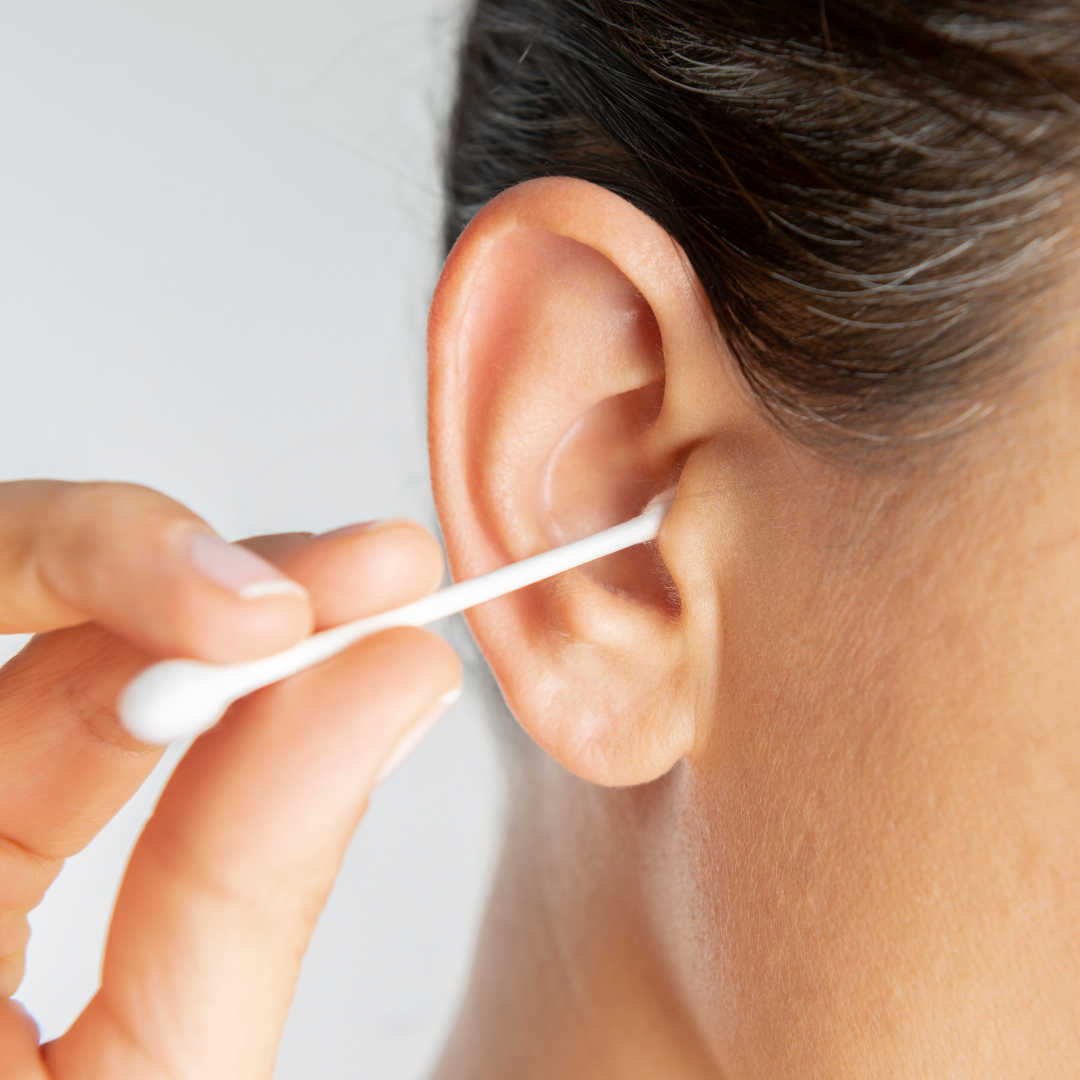
Although cotton swabs feel like accessible ear-care tools, introducing them into the canal hinders self-cleaning mechanisms and may harm your hearing. Our clinic establishes whether cerumen requires physical removal and identifies the safest protocols for your individual ear anatomy. Healthy ears rarely require aggressive manual intervention; nevertheless, when blockage develops, we assist patients in safely extracting excess cerumen.
Why Cotton Swabs Create Complications Inside the Ear
In audiology, earwax (cerumen) is recognized as a vital protective substance rather than dirt. It functions to intercept foreign debris, suppress bacterial activity, lubricate internal tissues, and guard vulnerable ear canal skin. Natural temporomandibular jaw motion combined with epithelial migration steadily pushes aging cerumen outward, where it naturally sheds or rinses away in the shower.
Using a cotton swab within the ear canal halts this physiological self-cleaning function. While the fibrous tip might extract superficial wax particles, it predominantly forces deeper accumulations toward the tympanic membrane. Repeated use can pack wax into a firm blockage and create the plugged sensation that encourages even more cleaning.
Although swabs can sanitize the outer folds of the auricle, they should never penetrate the delicate ear canal.
Potential Ear Damage and Complications from Q-Tips
The sensitive skin protecting the ear canal exhibits extreme thinness and scratches effortlessly. Tiny skin lacerations provoke pain and bleeding while forming entry pathways for pathogens, multiplying the chance of external ear infections. In addition, the cotton head can loosen and become retained as an obstructing foreign object in the ear.
Potential audiological complications include:
- Severe earwax impaction near the tympanic membrane
- Scratches, irritation, swelling, or bleeding
- Bacterial or fungal ear canal infection
- A cotton tip or other material trapped in the ear
- Traumatic puncture or laceration of the eardrum
- Dislocation or injury of the delicate hearing ossicles
- Temporary conductive loss or permanent auditory changes
- Acute tinnitus, vertigo, or intense otalgia
Serious injuries are uncommon, but they can happen if someone bumps the user’s arm, the swab slips, or it is inserted too far.
Clinical Guidelines on Earwax Removal Frequency
Most healthy adults have no clinical need to extract earwax on a set timetable. Physiologically stable ears continuously migrate wax outward, while standard showering takes care of the visible ear. Frequent overcleaning creates dry, irritated canal surfaces while amplifying the risk of severe impaction or microbial invasion.
Clinical clearing is warranted if cerumen occludes the auditory pathway, prevents diagnostic evaluation of the eardrum, affects a hearing aid, or sparks discomfort.
Safe Home Strategies for Managing Earwax
If earwax is not causing symptoms, leaving it alone is usually the safest option. Wipe only the outer ear with a soft, damp cloth, and let the canal clean itself.
When dense wax needs to be softened, we may suggest specialized OTC drops or solutions containing carbamide peroxide, saline, glycerin, or mineral oil. Dispense only the directed amount and restrict use strictly to the timeframe specified on the product packaging. Discontinue the product right away if you encounter otalgia, severe dizziness, contact dermatitis, or aggravating symptoms.
Performing home ear irrigation carries distinct risks and requires prior professional evaluation and hands-on technique instructions. Never use a dental water jet. Refrain from using ear candles, rigid metal picks, DIY camera probes, hairpins, or commercial home suction kits. These dangerous tools carry severe risks of burning skin, lacerating canal tissue, puncturing the tympanic membrane, or packing wax inward.
Indications for Scheduling a Professional Ear Cleaning
Schedule an appointment when an ear remains plugged after an appropriate softening treatment, wax appears deeply impacted, or home care repeatedly fails. Professional removal is also preferable when a person cannot safely hold still, has a narrow ear canal, uses hearing aids, or has medical or surgical factors that make drops or irrigation risky.
Arrange an immediate clinical evaluation for:
- Sharp ear pain, chronic itching sensations, or localized tenderness
- Otorrhea containing blood, active pus, serous fluid, or an unpleasant odor
- Systemic fever spikes or acute swelling near the external ear
- The sudden appearance of tinnitus or true dizziness
- Sudden hearing drops or auditory deficits that remain after wax removal
- Suspected tympanic membrane tears or retained cotton foreign bodies
- Chronic cerumen impactions that clog or disrupt hearing aids
Regard sudden unilateral hearing loss as a time-sensitive medical emergency instead of presuming it is earwax. Timely clinical evaluation distinguishes benign wax blockages from urgent inner ear pathologies requiring rapid steroid therapy.
How Healthcare Providers Extract Impacted Earwax
First, we inspect the auditory canal under otoscopic or microscopic visualization to confirm wax occlusion and rule out infections, tissue trauma, or eardrum perforations. The safest removal method depends on wax consistency, canal anatomy, medical history, previous surgery, and the patient’s ability to tolerate the procedure.
Standard clinical removal options include:
- Medical-grade wax softeners administered prior to or during the procedure
- Gentle, temperature-controlled fluid irrigation provided the tympanic membrane is intact
- Precision micro-suction under continuous microscopic visualization
- Manual instrument clearance utilizing dedicated ear loops, fine curettes, or small forceps
Visual guidance empowers the clinician to protect delicate canal skin and pause immediately if sensitivity is detected. Dense or desiccated cerumen impactions frequently necessitate using more than one removal method. Upon completing removal, the clinician performs a final inspection to confirm optimal canal and eardrum health. If post-cleaning symptoms such as fullness, tinnitus, unsteadiness, or hearing reduction persist, specialized testing can locate the primary cause.
Contact Us for Safe Professional Earwax Removal
Should your ears feel congested or your hearing performance decline, arrange an evaluation with our audiology clinic instead of reaching for swabs. The diagnostic session entails reviewing your symptom timeline, past otologic procedures, hearing aid usage, past home treatments, and risk factors for recurring cerumen. Connect with our practice today to reserve an appointment for safe, professional earwax removal.