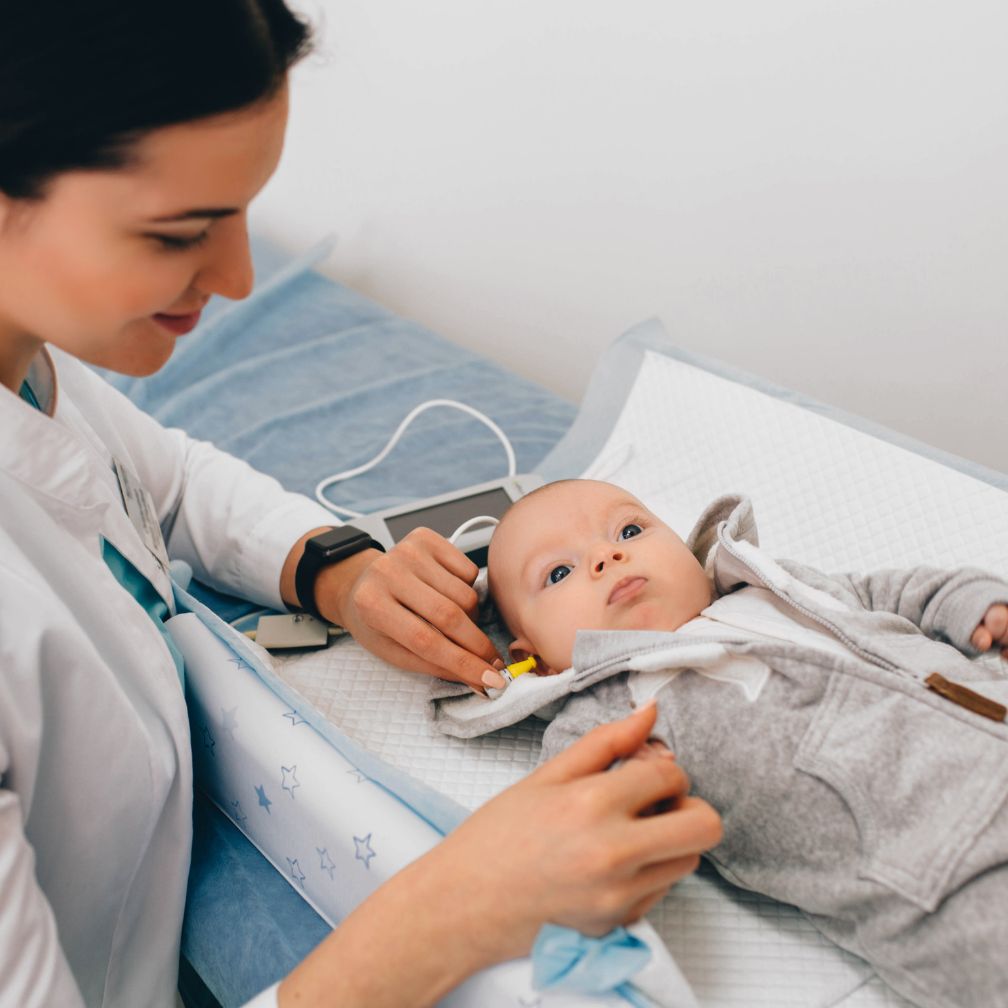
For guardians of newborns, discovering that an infant faces auditory obstacles frequently produces immense mental exhaustion. Yet the encouraging reality remains that owing to swift diagnosis and early care, infants experiencing hearing loss will effortlessly thrive. Unquestionably, such infants can develop clear speech, social competencies, and enduring bonds within their community, realizing a wonderful life!
Deploying personal hearing aids alongside cochlear implantation options yields two outstanding clinical approaches for supporting infants with hearing loss. Further down, we explore their mechanisms of action to help you decide which technology best serves your youngster.
Demystifying Hearing Deficits in Newborns
Auditory loss among infants typically comes from broad health factors, such as:
- Identified genetic predispositions (even without documented familial lineage)
- Prenatal viral exposures like cytomegalovirus (CMV) or rubella
- Significant obstetric complications, featuring systemic oxygen lack or early gestational delivery
- Specific ototoxic pharmaceuticals applied inside specialized neonatal units
Which milestone takes precedence for parents? Swift clinical screening. Consequently, newborns within United States birth units undergo auditory screening prior to hospital discharge. Certified pediatric audiologists active execute the universal “1-3-6” care benchmark:
- Primary hearing check administered prior to 1 month of age
- Confirmed hearing diagnosis confirmed within 90 days of life
- Specialized intervention (incorporating wearable options or targeted therapy) initiated prior to 6 months of life
Reaching these early milestones provides infants the best chance for healthy speech, language, and brain development. Should you desire expert guidance regarding these evaluations, your family pediatrician will gladly help!
Deploying Hearing Aids for Newborns
Regarding babies affected by mild to severe hearing loss, prescription hearing aids generally function as the foundational first step. Such compact, fitted instruments amplify incoming audio enabling babies to process spoken dialogue and surrounding noise with greater accuracy.
Specialized hearing devices for babies function as:
- Proven safe for newborn infants merely weeks old
- Crafted with cushioned, comfortable ear molds that get remade as the child expands
- Outfitted with child-resistant battery compartments and dedicated pediatric safety elements
- Custom-calibrated by a pediatric hearing practitioner to accommodate your infant’s exact hearing needs
As your baby grows, wearable units demand periodic adjustments to maintain ideal ear-canal fit and acoustic output.
Cochlear Implants for Infants
When an infant presents with severe to profound sensorineural loss and derives insufficient benefit from wearable aids, clinicians often recommend a cochlear implant. In contrast to traditional hearing aids, cochlear implant systems:
- Involve outpatient surgical implantation within the temporal bone performed under controlled clinical conditions
- Bypass damaged parts inside the inner ear anatomy
- Convert sound into electrical signals that stimulate the auditory nerve directly
Dedicated pediatric cochlear devices serve as:
- Formally FDA-cleared for application in young infants as young as 9 to 12 months
- Extremely effective when combined with structured early intervention and strong parental involvement
- Prescribed only after extensive diagnostic reviews by a certified audiologist and otolaryngologist
That multi-step journey involves radiological imaging, hearing tests, and open dialogue concerning long-term communicative results.
Hearing Aids Versus Cochlear Implants: A Direct Comparison
- Mild to severe levels of impairment utilize Hearing Aids; Severe to profound hearing loss necessitates Cochlear Implants
- Non-Invasive external fitting: Hearing Aids; Surgical insertion required: Cochlear Implants
- Traditional acoustic amplification: Hearing Aids; Digital electrical impulse transformation: Cochlear Implants
- Treatment starts in newborn infancy: Hearing Aids; Procedure starts at 9-12 months: Cochlear Implants
Summary Thoughts: Supporting Your Child’s Hearing Journey
Should your baby receive a formal hearing loss diagnosis, you can rely on excellent technological options and dedicated care teams are available. With the help of pediatric hearing specialists, many young children achieve language skills that are on par with their peers.
Regardless of whether your baby requires wearable hearing aids or a surgical cochlear implant, taking immediate action produces a lifelong positive impact.
Have questions about your baby’s hearing health? Connect with our office today to receive a complete diagnostic assessment and personalized rehabilitation plan.