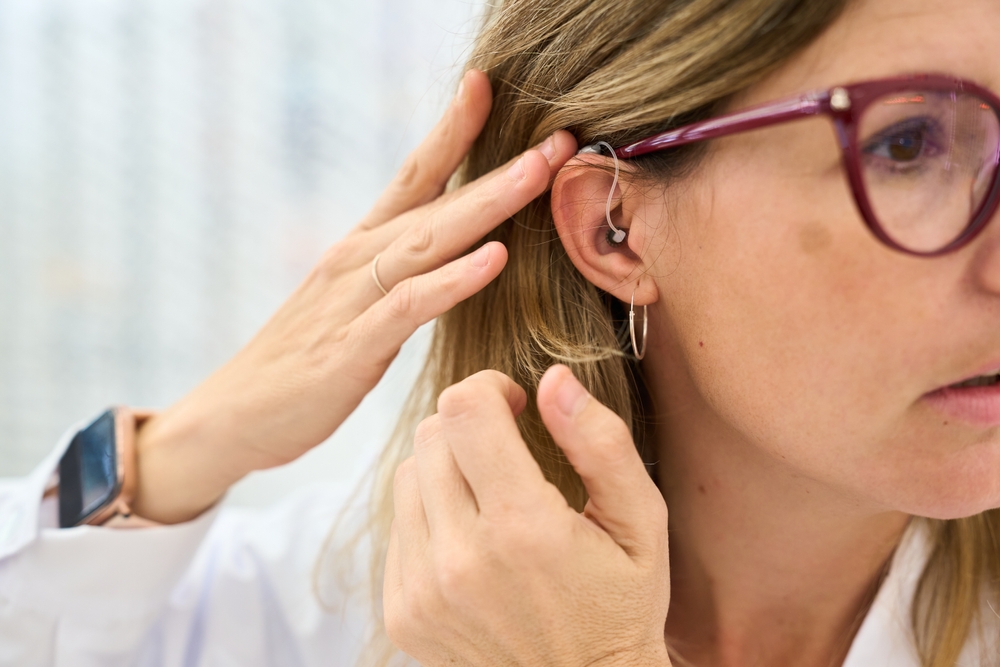
A primary reason individuals put off addressing auditory deficits is the assumption that assistive devices will be unsightly or awkward to wear. This hesitation is entirely valid given historical product designs! Furthermore, many individuals harbored deep anxieties about social isolation, fearing others would exclude them from discussions based on assumptions of cognitive decline or profound auditory deficits.
For many people, this image has stuck, making them hesitant to take the next step. But the reality is that today’s modern hearing aids look and feel very different from what you might expect. Revolutionary breakthroughs in micro-component miniaturization and ergonomic design have rendered these devices incredibly compact, ultra-lightweight, and virtually unnoticeable.
If you have spent years avoiding an audiologist due to the appearance of old devices, now is the perfect moment to explore today’s sleek alternatives!
Dispelling the Myth: Modern Devices Have Transcended Older Styles
When asked to visualize a hearing instrument, the average person still envisions an awkward, highly conspicuous piece of hardware visible from yards away. If that’s the case, you’re thinking about hearing aids circa the 1980s and ’90s.
Over the last few generations, this medical technology category has experienced a total structural evolution. Continuous refinements in ergonomic styling, nanometer-scale circuitry, and digital audio engineering have radically overhauled the modern cosmetic profile. They’re smaller, sleeker, and designed to blend in (or disappear entirely).
Numerous modern instruments are inserted completely within the ear canal structure, rendering them undetectable throughout standard daily dialogue. Others rest behind the ear but are so compact and lightweight that they’re easy to overlook, especially when matched to your hair or skin tone.
A Taxonomy of Modern Styles: From Totally Hidden to Ultra-Streamlined
If you’re wondering what your main options in hearing aids actually look like, here’s a simple breakdown:
The Invisible-in-Canal (IIC) Form Factor
This tier represents the absolute pinnacle of cosmetic concealment. IIC devices sit completely inside the ear canal and are custom-made to fit your ear. Spoken interactions at arm’s length occur without anyone realizing a medical device is present. They remain an exceptionally sought-after solution for patients with mild-to-moderate deficits who refuse to compromise on cosmetic privacy.
Receiver-in-canal (RIC) / Receiver-in-the-ear (RITE)
This particular layout has become the benchmark standard for contemporary hearing health restoration. The system utilizes an incredibly small housing resting behind the ear, linked by a hair-thin translucent cable to a miniature speaker within the ear pathway. To onlookers, this streamlined design closely mirrors fashionable consumer electronics or sports earbuds. Most people won’t notice them unless they’re looking.
Behind-the-ear (BTE)
These units reside entirely behind the external ear, providing a slightly larger chassis that is still infinitely more elegant than historical variations. Clinically indicated for profound or severe hearing deficits, they deliver immense acoustic power without the outdated, conspicuous mass of the past.
The bottom line is simple: modern assistive hearing systems are crafted to serve your life quietly, not to draw attention to your ears.
Modern Hearing Aids: Looking Better and Doing a Lot More
It is vital to recognize that this technological revolution is not simply a visual upgrade. Present-day models perform like advanced personal audio computers instead of basic medical listening aids. Many connect directly to your phone via Bluetooth, letting you stream calls, music, or even TV audio straight to your ears with no headphones needed.
Most come with smartphone apps, so you can adjust volume or switch settings without ever touching the device. For instance, when entering a highly reverberant dining space, you can suppress ambient acoustic noise and sharpen speech clarity in mere moments. Rechargeable batteries have also replaced the tiny ones people used to struggle with. The process is as simple as placing the units into their charging dock each night, identical to charging your cell phone.
Empowerment Over Hesitation: Redefining Hearing Health Care
Even knowing all of this, it’s easy to hesitate. Exploring hearing aid options can be challenging on a mental and emotional level because it’s an admission that our hearing isn’t what it used to be. Such moments frequently spark an uncomfortable sense of vulnerability, as though we are losing command over our physical frames.
But here’s a different way to look at it: Hearing aids aren’t a sign that something has gone wrong. Rather, they represent a proactive response to natural biological evolution—a transition shared by every human being. Investing in your hearing shows that you are actively deploying advanced resources to support your systemic well-being and social connection.
Consider the profound joy of wearing a tiny, unnoticeable device that lets you confidently command group discussions, master noisy environments, and immerse yourself in what matters most. Talk about empowering!
Discover the Reality of Modern Otolaryngological Solutions
The most effective method to permanently banish an obsolete stereotype is to personally examine current clinical options. We invite you to come in, ask questions, and explore your options with no pressure and no commitment necessary. Treat this as a risk-free exploratory step to comprehend the incredible aesthetic shift that has occurred in our field.
You will likely be utterly delighted to discover how microscopic, physically seamless, and high-performing today’s options truly are! Please contact our patient care coordinators or utilize our digital portal to secure your consultation this week.